
Harvard referencing
Harvard citations from sources you control.
The most widely used author–date convention in UK higher education, and the least standardised: institutions publish their own variants that genuinely differ.
How Harvard cites
Sources are cited in the body by author surname and year, in parentheses or narratively.
The reference list is alphabetical by author, so the reader moves from a name in the text to an entry by name.
Editions
Mindgrads renders Harvard edition cite-them-right-12. Briefs often name an edition, and the difference is not cosmetic — check the brief before you start rather than reformatting afterwards.
What Mindgrads does
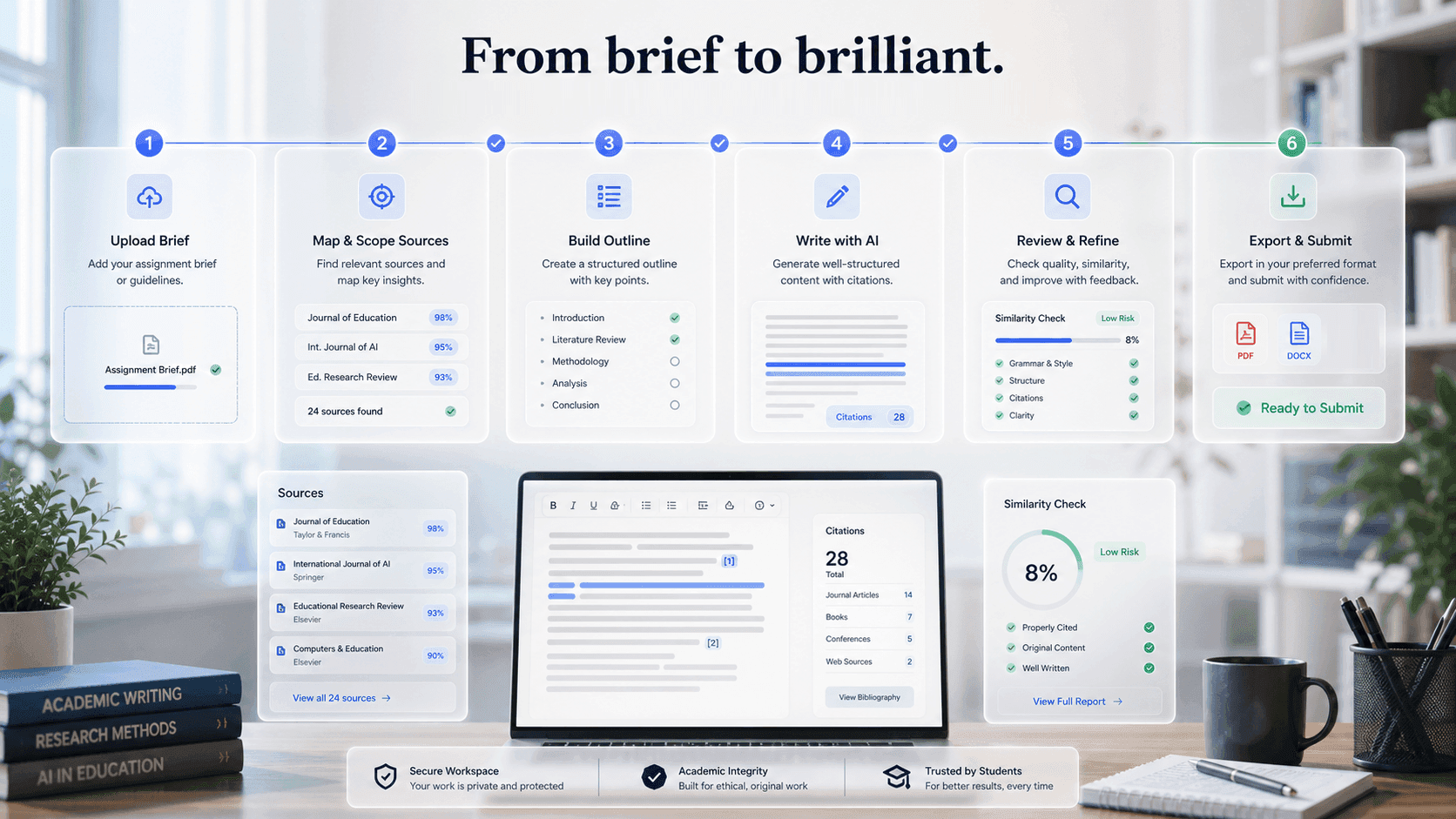
References come from sources you have added to the project, so a citation points at a document you uploaded rather than a title a model produced. In-text citations and the bibliography are generated from those records and rewritten together when you change style, and both are carried into DOCX and PDF export.
Formatting rules change between editions and institutions publish their own variants. Check the output against your course handbook before submitting — this is a tool for managing references, not a substitute for the requirements you were given.
Ready workspace
Bring your next brief. See what it needs before you pay.
Upload your materials, get a free readiness check, and confirm one complete build when you are ready.